I loved looking at and seeing their old stores during George Washington’s time. The people in the stores were dressed in the attire of years ago. Their talks and demonstrations were informative about how people made a living in Colonial times.
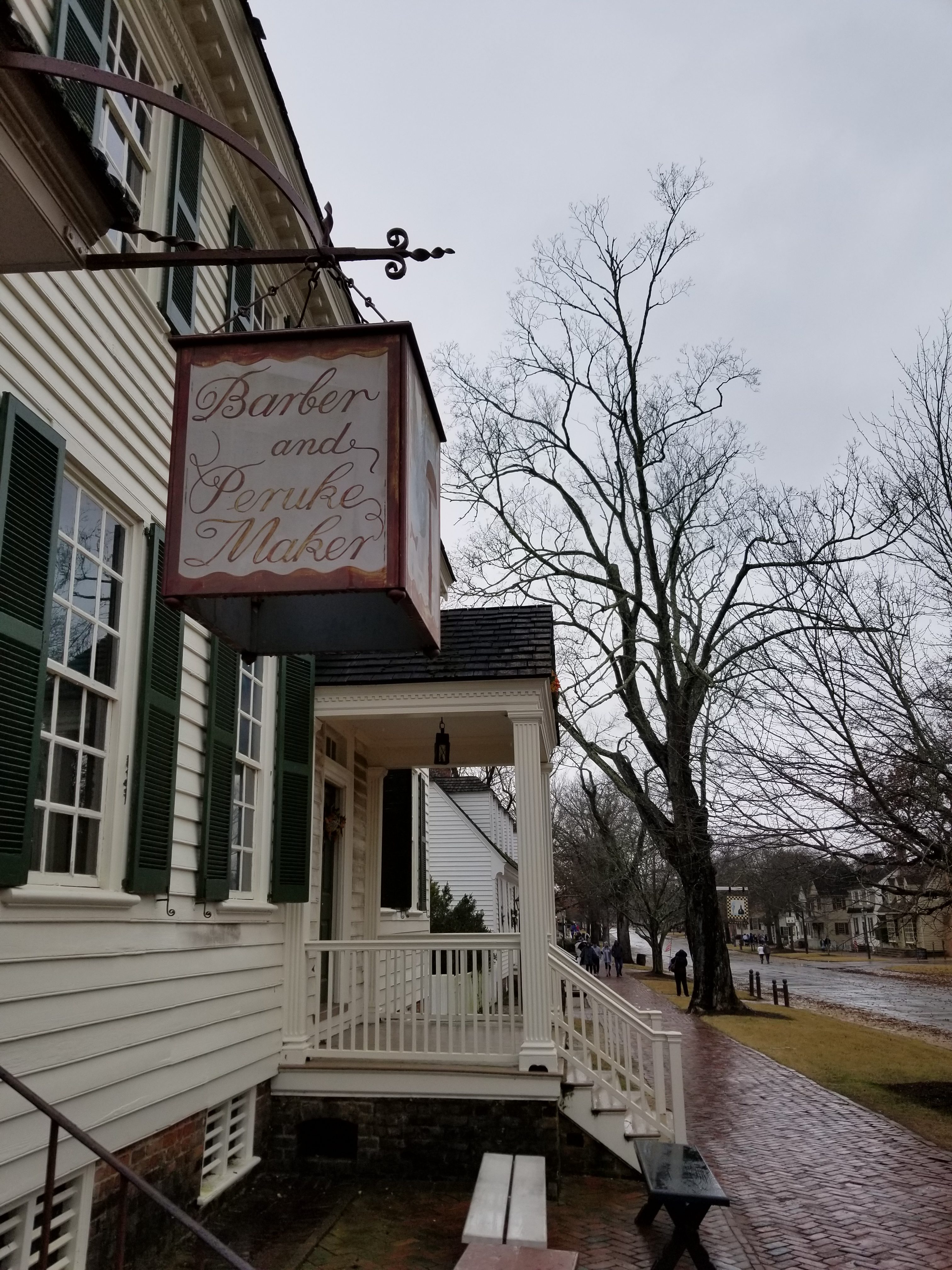
We had a tour of the Barber and Peruke Maker. Peruke means “artificial head of hair ” in the French language. Wigs were popular for men in the 17th and 18th centuries. They would shave off your natural hair and then fit you for a wig. Very few women wore wigs because they did not want their hair shaved off. Wigs were costly, and only the upper 5 % could afford one. A wig such as George Washington’s took over 100 hours to make. Wigs were made from Yak, horse, goat, and human hair.

We had a tour of the Apothecary or Drug Store. The original brown containers from the 1700s that held the different compounds were in the store. The stores were very dark inside since they depended on candlelight for light. Medicine was rolled in licorice root to give it a better taste. The different compounds were mixed for your particular treatment.

The dressmaker spent 100 hours making a wedding dress, which was very labor-intensive. A politician’s suit with a vest and all the lining took the tailor 100 hours to complete. Corsets could take 50 hours or more to make.

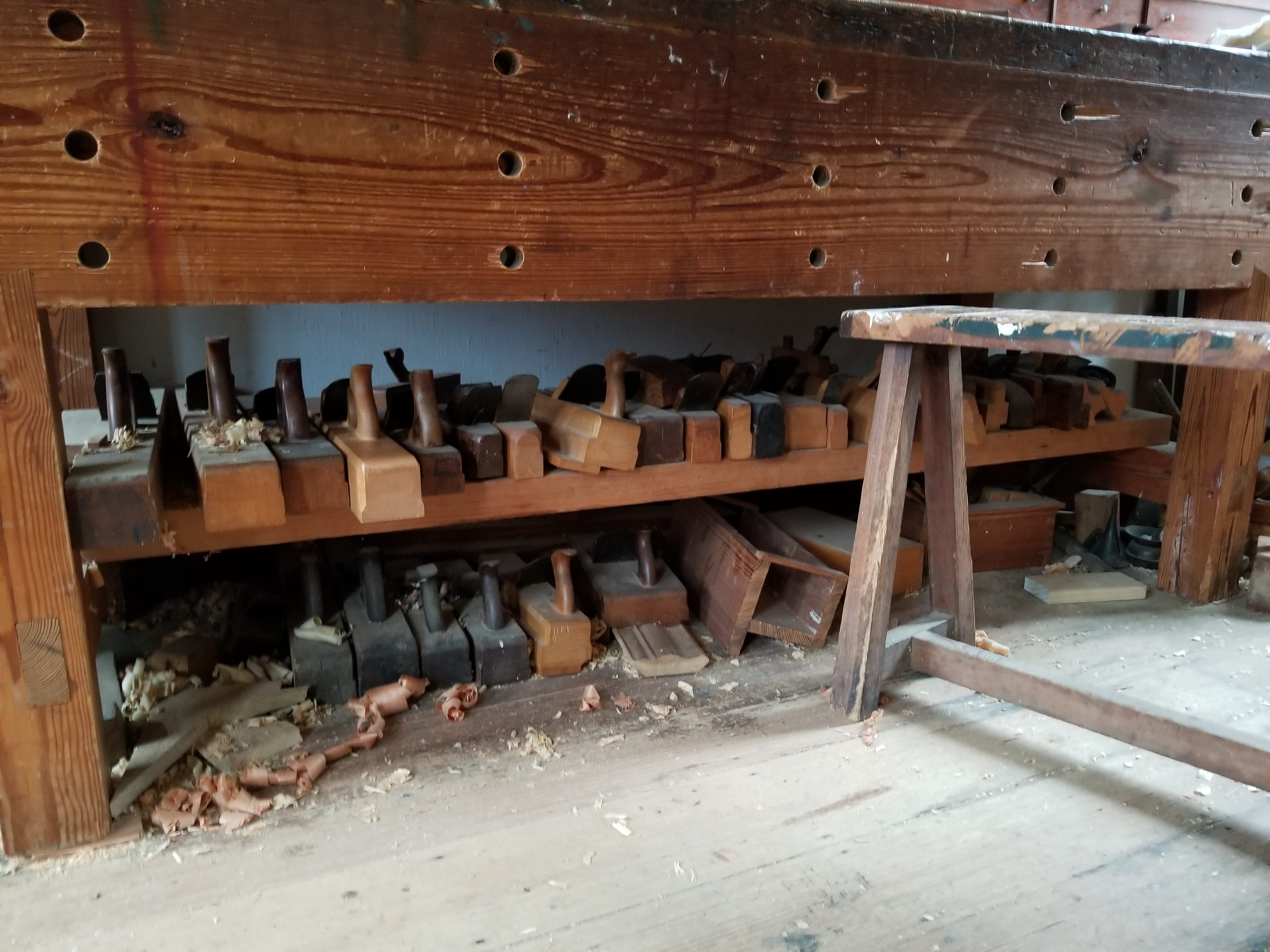
The cabinet maker makes cupboards, doors, and window frames for your home. He had every kind of wood plane you could imagine for the different shapes and cuts to decorate the trim. He also made wooden benches for outdoor use.
The shoemaker used leather from cattle and goats to make shoes. Goat leather was used in the more expensive shoes as it is very soft and subtle. A pair of boots like George Washington wore took half a year’s wages that most people got paid. Excellent quality shoes took 8 hours to make. Slip-on slippers took 3 hours to complete.
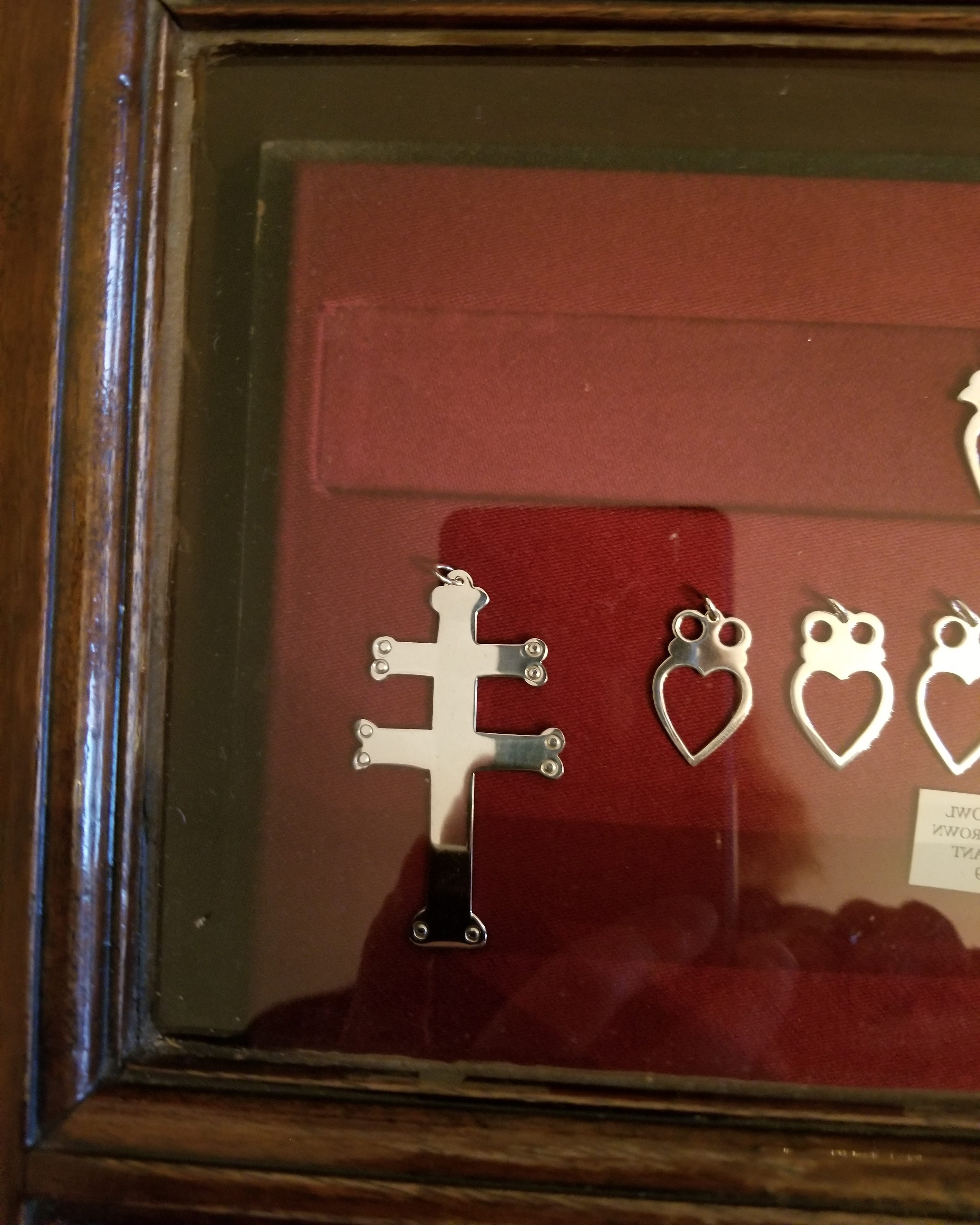
We went to the silversmith shop. They still make jewelry today that is stamped Colonial Williamsburg. I purchased a sterling silver cross of Lorraine. They sell candle sticks, necklaces, earrings, and more.
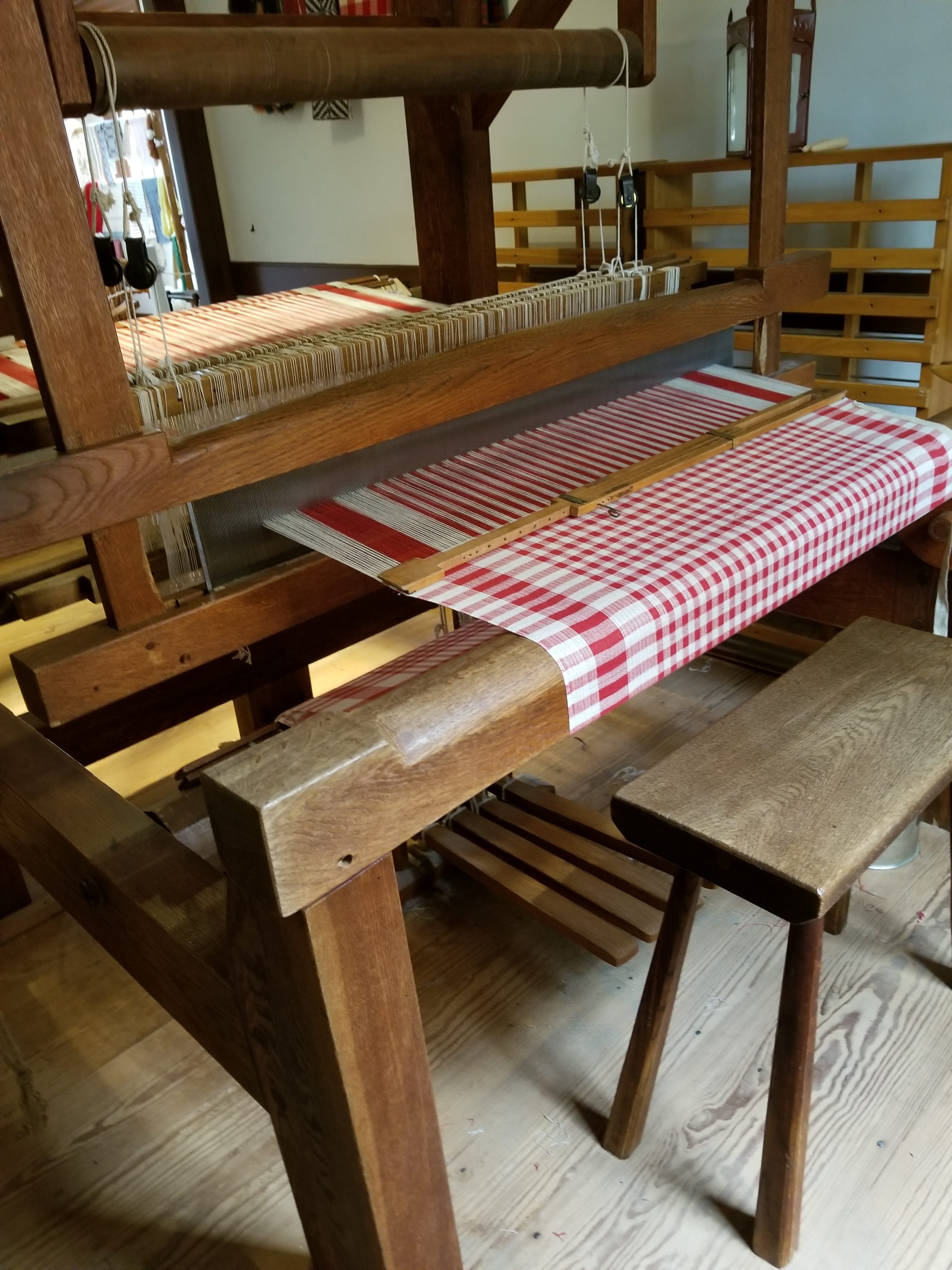
We had a tour from the Weaver. He told us it took all day to weave 13 yards of fabric. In Colonial days he would start as an apprentice. He would have the apprenticeship for five years without wages, but he would get room and board. When the training was finished, he would be a journeyman. If he could save up a half year’s wages, he could buy a loom and start his shop.
We watched the Printer and Bindery man putting leather on a book. He said you had to carefully shave the leather so you would not put a hole in it and have to start over. He used cowhide to cover the books. He had to heat various irons for different patterns on the leather. If you heated the iron too hot, you would burn the leather. You could not rest because the way would be off if you stopped, and the leather cover would look terrible. The very wealthy would have gold-gilded leather covers put on their books.
History indeed came to life on Market Square in Colonial Williamsburg, Virginia.
Copyright 2018. Not to be reproduced in any form.